In recent years, Japan has emerged as a global leader in understanding the profound connection between physical exercise and mental health. As mental health concerns continue to rise worldwide, Japanese researchers and health organizations are pioneering innovative approaches that demonstrate how regular physical activity can significantly improve psychological wellbeing, reduce symptoms of depression and anxiety, and enhance overall quality of life.
The relationship between exercise and mental health has been studied extensively in Japan, with groundbreaking research revealing that physical activity is not merely beneficial for physical fitness but serves as a powerful therapeutic tool for mental health maintenance and improvement. From traditional practices like radio taiso to modern interval walking techniques, Japan’s approach to fitness emphasizes both physical and mental health outcomes.
This comprehensive article explores the latest scientific evidence from Japan regarding how exercise impacts mental health, examines innovative fitness methods developed by Japanese researchers, and provides actionable insights for improving your mental health through regular physical activity.
Understanding the Mental Health Crisis in Japan
Rising Mental Health Concerns
Japan faces significant mental health challenges despite being known for having the world’s longest life expectancy. Recent research published in 2024 reveals that mental health issues including anxiety, substance use disorders, and depression have substantially increased over the years. The social stigma surrounding mental illness in Japan has historically limited research and discussion about mental health, making recent advances in this field particularly significant.
According to the World Health Organization, exercise helps prevent and manage various conditions while alleviating symptoms of depression and anxiety and supporting brain health. The global cost of physical inactivity to public healthcare systems between 2020 and 2030 could reach approximately $300 billion, underscoring the urgent need for effective exercise-based interventions.
The Japanese Context: Unique Mental Health Challenges
Japan experiences unique mental health phenomena, including “May Blues,” which occurs during the transition after the new fiscal year starts in April, followed by a week-long nationwide holiday. This condition causes mental and physical instability triggered by environmental changes at work, school, or residence. Interestingly, Google searches for May Blues decreased by 80% during the COVID-19 pandemic compared to 2019, suggesting that reduced interpersonal interactions helped some individuals avoid this seasonal mental health challenge.
The Japanese population’s mental health landscape has been further complicated by the COVID-19 pandemic. Research conducted in June 2021 with 824 Japanese workers found that reduced exercise was tied to depression and insomnia during the pandemic, while maintained outdoor activity was linked to anxiety symptoms.
The Science Behind Exercise and Mental Health
Neurobiological Mechanisms
Japanese researchers have made significant contributions to understanding how exercise impacts brain function and mental health at the biological level. The core values of the Japanese Association of Sports Psychiatry emphasize basic research on physical exercise and brain function, investigating the relationship between physical movement and brain function through biochemistry, physiology, and imaging studies.
Exercise influences mental health through multiple biological pathways:
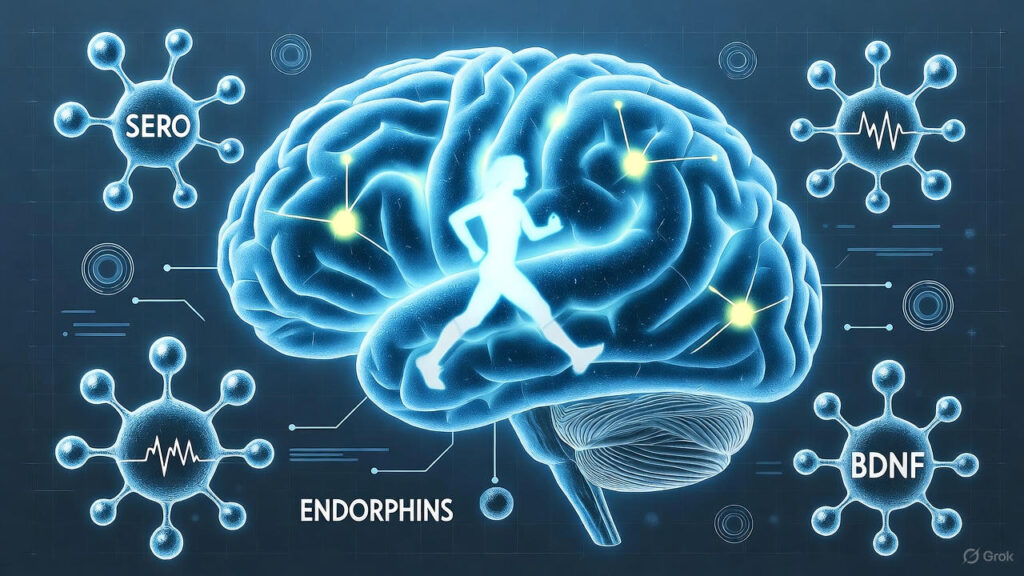
Neurotransmitter Regulation: Physical activity increases the production of endorphins, serotonin, and dopamine—neurotransmitters crucial for mood regulation and emotional wellbeing.
Stress Hormone Reduction: Regular exercise helps regulate cortisol levels, reducing the physiological impact of chronic stress on mental health.
Neuroplasticity Enhancement: Physical activity promotes the growth of new neural connections and supports brain health, particularly in regions associated with mood regulation and cognitive function.
Inflammation Reduction: Exercise has anti-inflammatory effects throughout the body, including in the brain, where chronic inflammation is associated with depression and anxiety.
Evidence from Japanese Research Studies
The JAGES Longitudinal Study
A groundbreaking study using data from the Japan Gerontological Evaluation Study (JAGES) examined 1,422 adults aged 65 years or older without depression in 2011, following them through 2013. The research revealed that exercising two or more times a week reduced the odds of developing depression by 48% compared to non-exercisers.
Significantly, the study found that older adults who exercised with others had substantially lower risk of depression than those who exercised alone. This finding emphasizes the importance of social connection in exercise programs, as the combination of physical activity and social interaction provides enhanced mental health protection.
COVID-19 Pandemic Impact Studies
Research examining Japanese workers during the COVID-19 pandemic revealed critical insights about exercise and mental health. The study found that individuals who decreased their exercise time during the pandemic experienced higher rates of depression and insomnia. This research underscores how reduced physical activity can rapidly impact mental health, even in previously healthy individuals.
Youth Athlete Mental Health Research
A three-wave cross-sectional study published in 2025 examined the mental health of Japanese youth athletes during the second year of the COVID-19 pandemic. The findings revealed higher rates of poor mental health indicators in the second and third surveys compared to baseline, suggesting that youth athletes experienced deteriorating mental health despite the partial resumption of sports activities.
This research highlights that physical activity alone may not be sufficient for mental health maintenance when other social and environmental factors are disrupted. The study emphasized the need for continued psychological monitoring even after sports activities resume.
Innovative Japanese Exercise Methods for Mental Health
Radio Taiso: Traditional Daily Calisthenics
First introduced in 1928, radio taiso remains one of Japan’s most widely recognized exercise routines, known by approximately 97% of the Japanese population. Broadcast daily at 6:30 AM, this three-minute radio program incorporates exercises that enhance flexibility, balance, lower-body strength, and endurance.
Mental Health Benefits of Radio Taiso:
Research highlights numerous mental health benefits for older adults practicing radio taiso. A 12-week program showed improved balance and endurance among participants. More impressively, a longitudinal study of over 11,000 elderly people found an 18% lower risk of dementia among those who practice radio taiso regularly.
Many Japanese companies, particularly in physically demanding industries like construction, begin their workday with group radio calisthenics. This practice reduces fatigue and injuries while strengthening team cohesion, demonstrating how exercise can simultaneously support physical health, mental health, and social connection.
Key Features:
- Accessible to all fitness levels
- Can be performed anywhere
- Requires no equipment
- Takes only three minutes
- Promotes social bonding when done in groups
Japanese Walking Method: Interval Training Revolution
The Japanese walking method, developed by researchers Hiroshi Nose and Shizue Masuki from Shinshu University in 2007, has recently gained widespread attention for its powerful mental health benefits. This innovative approach involves alternating three minutes of fast-paced walking with three minutes of slower-paced walking, repeated over 30 minutes.
Scientific Foundation:
The original 2007 study published in Mayo Clinic Proceedings randomly assigned 246 older adults into three groups: no walking, moderate-intensity continuous walking, and high-intensity interval walking. The interval walking group experienced greater increases in leg strength and overall physical fitness, along with more significant reductions in blood pressure compared to those who walked at a moderate pace continuously.
Mental Health Benefits:
Exercise physiology experts note that the focus required during high-intensity intervals creates a mindfulness effect. When you must increase intensity, your mind focuses on the activity at hand, potentially reducing anxious or depressive rumination. Recent reviews found that High-Intensity Interval Training can significantly reduce symptoms of anxiety, particularly in individuals with lower baseline anxiety levels.
How Japanese Walking Supports Mental Health:
- Cardiovascular Challenge: The alternating intensity challenges the cardiovascular system, improving heart health, lung capacity, and caloric burn more effectively than steady-state walking.
- Metabolic Activation: Interval walking revs up metabolism faster than continuous walking, potentially improving energy levels and reducing fatigue associated with depression.
- Mindfulness Component: The need to monitor and adjust intensity creates present-moment awareness, interrupting negative thought patterns.
- Accessibility: The method requires no special equipment or location, making it accessible to most individuals regardless of fitness level or financial resources.
- Time Efficiency: Just 30 minutes provides substantial mental and physical health benefits, making it realistic for busy schedules.
Implementation Guidelines:
To practice Japanese walking effectively:
- Warm up with 5 minutes of gentle walking
- Walk at high intensity (70% of maximum effort) for 3 minutes
- Walk at low intensity (40% of maximum effort) for 3 minutes
- Repeat this cycle 5 times
- Cool down with gentle stretching
Undokai: Corporate Sports Festivals
Japan’s tradition of undokai (sports festivals) demonstrates how organized physical activity can strengthen community bonds while supporting mental health. HR service firm Pasona Group is hosting the Undokai World Cup 2025, featuring inclusive activities designed to enhance employee wellbeing and community engagement.
Corporate-led sports festivals improve employee mental health through multiple mechanisms:
- Strengthening workplace social bonds
- Enhancing community cohesion
- Building social resilience
- Providing structured physical activity opportunities
- Creating positive associations with exercise
Specialized service providers now design and manage undokai for companies and communities, reflecting growing demand for these events. This trend demonstrates recognition that mental health benefits from exercise are amplified when combined with social connection and community engagement.
Comprehensive Mental Health Benefits of Regular Exercise
Depression Prevention and Treatment
Exercise has been shown effective in both treating existing depression and preventing new onset depression. Japanese research consistently demonstrates that regular physical activity reduces depressive symptoms through multiple pathways.
Key Findings:
| Study Focus | Participants | Results | Mental Health Impact |
|---|---|---|---|
| JAGES Longitudinal Study | 1,422 older adults | 52% reduced depression odds with 2+ weekly exercises | Significant prevention effect |
| COVID-19 Worker Study | 824 Japanese workers | Decreased exercise linked to depression | Rapid mental health deterioration |
| Group Exercise Study | Middle-aged adults | Lower poor mental health with group exercise | Social exercise most protective |
| Post-Earthquake Study | Older survivors | Group exercise reduced depressive symptoms | Community support crucial |
Exercise addresses depression through:
- Neurotransmitter regulation (increased serotonin and dopamine)
- Reduced inflammation in the brain
- Improved sleep quality
- Enhanced self-efficacy and accomplishment
- Increased social connection when exercised with others
- Distraction from negative rumination
Anxiety Reduction
High-Intensity Interval Training, including Japanese walking methods, significantly reduces anxiety symptoms. The mechanism involves both physiological changes (reduced stress hormones, improved stress response) and psychological factors (increased confidence, sense of control, mindfulness during activity).
Research indicates that anxiety reduction from exercise is particularly pronounced in individuals with lower baseline anxiety, suggesting exercise may be especially beneficial as a preventive intervention before anxiety becomes severe.
Anxiety-Reducing Exercise Characteristics:
- Moderate to high intensity
- Regular frequency (2-3+ times weekly)
- Rhythmic and repetitive movements
- Outdoor settings when possible
- Social components
- Mindfulness elements
Cognitive Function and Dementia Prevention
Japanese research on radio taiso demonstrated an 18% lower risk of dementia among regular practitioners over 11,000 elderly participants. This finding aligns with broader research showing exercise supports cognitive health through:
- Increased blood flow to the brain
- Promotion of neuroplasticity
- Reduction of inflammation
- Improvement in sleep quality
- Enhanced learning and memory formation
As Japan’s population ages, policy priorities are shifting from merely extending life expectancy to extending healthy life expectancy. Physical activity is central not only to physical capacity but also to mental and cognitive health.
Stress Management and Resilience
Exercise builds psychological resilience—the ability to adapt to stress and adversity. Japanese research during the COVID-19 pandemic revealed that individuals who maintained or increased exercise during stressful periods experienced better mental health outcomes.
Resilience-Building Mechanisms:
- Improved stress hormone regulation
- Enhanced confidence in physical capabilities
- Development of coping strategies
- Creation of positive routines
- Social support networks through group exercise
- Sense of control and agency
Social Connection and Loneliness Prevention
One of the most significant findings from Japanese research is that exercising with others provides superior mental health benefits compared to exercising alone. A longitudinal study of Japanese middle-aged adults found that those who exercised with others had significantly lower odds of poor mental health five years later.
After the Great East Japan Earthquake, older adults who increased group exercise frequency after the disaster experienced less exacerbation of depressive symptoms. This demonstrates that the social component of exercise may be particularly crucial during times of stress or trauma.
Social Exercise Benefits:
- Reduced loneliness and isolation
- Enhanced sense of belonging
- Increased accountability and motivation
- Shared experiences and connections
- Reduced stigma around mental health struggles
- Access to social support networks
Exercise Patterns and Mental Health Optimization
Frequency and Duration
Japanese research provides clear guidance on exercise frequency for mental health benefits. The JAGES study found that exercising two or more times per week significantly reduced depression risk. However, the relationship between exercise and mental health is not purely linear—more is not always better.
Optimal Exercise Patterns:
| Frequency | Duration | Intensity | Mental Health Benefit |
|---|---|---|---|
| 2-3 times/week | 30-45 minutes | Moderate | Baseline protection |
| 4+ times/week | 30-60 minutes | Moderate-High | Enhanced benefits |
| Daily | 20-30 minutes | Light-Moderate | Routine establishment |
| 2-3 times/week | 20-30 minutes | High Intensity | Time-efficient option |
According to 2024 survey data, 54.8% of Japanese adults now play sports at least once a week, up from just 23.7% in 1992, demonstrating increasing recognition of exercise’s importance.
Individual vs. Group Exercise
While both individual and group exercise provide mental health benefits, Japanese research consistently shows enhanced effects from social exercise. The optimal approach may involve:
- Group exercise 2-3 times weekly for social connection and accountability
- Individual exercise 1-2 times weekly for personal reflection and flexibility
- Variety in activities to maintain engagement and work different body systems
Exercise Type Considerations
Different types of exercise may offer unique mental health benefits:
Aerobic Exercise (Walking, Jogging, Cycling):
- Strongest evidence for depression and anxiety reduction
- Accessible to most individuals
- Can be easily done socially or individually
Yoga: Recent Japanese surveys show yoga is immensely popular among women. Yoga combines physical activity with mindfulness, breathing practices, and meditation, offering comprehensive mental health support.
Strength Training:
- Builds self-efficacy and confidence
- Improves body image
- Provides measurable progress markers
- Can be done individually or in group classes
Mind-Body Practices:
- Radio taiso and similar practices
- Combine physical movement with mental focus
- Culturally embedded and socially accepted
- Require minimal time commitment
Practical Implementation: Making Exercise Work for Mental Health
Overcoming Barriers
Japanese research and clinical practice have identified common barriers to exercise and strategies to overcome them:
Time Constraints:
- Solution: Implement short-burst activities (5 minutes for every 55 minutes at work)
- Solution: Use time-efficient methods like Japanese walking (30 minutes)
- Solution: Integrate movement into daily routines (stairs instead of elevators)
Lack of Motivation:
- Solution: Find accountability partners
- Solution: Join group activities or classes
- Solution: Set realistic, achievable goals
- Solution: Track progress visibly
Unfamiliarity with Exercise:
- Solution: Start with accessible activities like walking
- Solution: Take introductory classes or sessions
- Solution: Use online resources for guidance
- Solution: Begin with culturally familiar practices like radio taiso
Physical Limitations:
- Solution: Consult healthcare providers for personalized recommendations
- Solution: Start with very low intensity and gradually progress
- Solution: Modify activities to accommodate limitations
- Solution: Focus on activities within current capabilities
Creating Sustainable Exercise Habits
Japanese research and practice emphasize sustainability over intensity. Key principles include:
Realistic Goal Setting: Rather than setting ambitious goals that may be unattainable, focus on small, achievable targets that build confidence and habit formation. Think about what you can realistically maintain rather than ideal scenarios.
Environmental Design:
- Prepare exercise clothing the night before
- Choose locations that are convenient and accessible
- Minimize friction between decision and action
- Create triggers that remind you to exercise
Social Integration:
- Schedule exercise with friends or family
- Join clubs, classes, or community groups
- Participate in workplace exercise initiatives
- Use social media or apps for accountability
Positive Associations: Avoid thinking of exercise as a “should” or obligation. Instead, focus on how it makes you feel afterward—improved mood, increased energy, reduced stress, sense of accomplishment.
Flexibility and Self-Compassion: Japanese health professionals emphasize that missing exercise sessions shouldn’t trigger self-criticism. Life circumstances change, and flexibility in exercise routines prevents the guilt cycle that can undermine mental health benefits.
Also Read: 15-Minute HIIT Workouts for Busy Professionals | Japan Fitness Guide 2025
Special Considerations and Warnings
Exercise Addiction and Over-Exercise
While exercise benefits mental health, excessive or compulsive exercise can become problematic. Exercise addiction can develop when individuals feel compelled to exercise even when sick, tired, injured, or when other responsibilities are neglected.
Warning Signs:
- Exercising despite illness or injury
- Extreme distress when unable to exercise
- Exercise interfering with work, relationships, or responsibilities
- Continued increase in exercise volume without rest
- Exercise used to compensate for eating
- Withdrawal symptoms when not exercising
If exercise feels more like a compulsion than a choice, consultation with mental health professionals is important.
When Exercise Alone Isn’t Enough
Exercise is a powerful tool for mental health but is not always sufficient as a standalone treatment. Japanese research emphasizes that exercise should be part of a comprehensive approach to mental health that may include:
- Professional mental health counseling or therapy
- Medication when appropriate
- Social support networks
- Adequate sleep and nutrition
- Stress management techniques
- Treatment of underlying physical health conditions
The Japanese Association of Sports Psychiatry recognizes that sports psychiatrists have varied roles, including providing mental health care for athletes, conducting research on psychological interventions, and studying sports-related mental disorders.
Individual Variation
Mental health responses to exercise vary significantly between individuals. Factors affecting response include:
- Baseline mental health status
- Previous exercise experience
- Genetic factors
- Concurrent stressors
- Social support availability
- Personal preferences and interests
Finding the right exercise approach may require experimentation and patience.
The Future of Exercise and Mental Health in Japan
Emerging Research Directions
Japanese researchers continue pioneering work in exercise and mental health, with current focus areas including:
Digital Health Integration: A 2024 study explored digital use and mental health in Japan, revealing that while digital technology can reduce face-to-face communication time, it can also support mental health when used appropriately. Future research will likely explore how digital tools can enhance exercise adherence and mental health monitoring.
Precision Exercise Prescription: Moving beyond one-size-fits-all recommendations, research is investigating how to match specific exercise types, intensities, and durations to individual characteristics and mental health needs.
Workplace Mental Health Interventions: Corporate Japan is increasingly investing in employee mental health. The domestic market for stress checks and mental health measures is expected to reach 28.8 billion yen ($214.7 million) by 2025, approximately twice the pre-pandemic level.
Companies like Marui Group have created Chief Wellbeing Officer positions, implementing resilience programs involving management education on physical, emotional, mental, and spiritual health aspects of wellbeing.
Policy Implications
Recent research highlighting mental health’s critical role in overall wellbeing has significant policy implications for Japan. Dr. Yuka Minagawa’s 2024 study on distress-free life expectancy noted that while substantial improvements occurred between 2010 and 2022, younger individuals benefited more than older adults, highlighting the need for targeted policies to improve mental wellbeing for older demographic groups.
As mental health issues prevalence increases, policymakers must focus on the complex relationship between physical and mental health in contemporary Japan, ensuring accessible exercise opportunities that support mental health across all age groups and socioeconomic levels.
Community-Based Initiatives
Japan’s tradition of community-based exercise programs provides a model for other nations. With over 210,000 sports and gym facilities (approximately 50,000 public) and 86% of public schools opening facilities to the wider community, Japan ensures affordable and inclusive opportunities to exercise across generations.
The establishment of Health and Sports Day as a national holiday demonstrates governmental commitment to promoting physical activity for both physical and mental health. Communities and schools hold sports festivals nationwide to promote comprehensive health and wellbeing.
Conclusion: Integrating Exercise for Mental Health
The evidence from Japanese research and practice clearly demonstrates that regular physical exercise is a powerful tool for mental health maintenance, improvement, and protection. From traditional practices like radio taiso to innovative methods like Japanese walking, Japan offers numerous evidence-based approaches to leveraging physical activity for psychological wellbeing.
Key Takeaways:
- Exercise two or more times weekly significantly reduces depression risk and improves mental health outcomes across age groups.
- Group exercise provides enhanced benefits compared to solitary activity, emphasizing the importance of social connection in mental health.
- Diverse exercise modalities from high-intensity interval walking to mind-body practices like yoga offer multiple pathways to mental health improvement.
- Accessibility and sustainability matter more than exercise perfection—finding activities you enjoy and can maintain consistently produces the best outcomes.
- Exercise complements but doesn’t replace comprehensive mental health care when professional treatment is needed.
- Cultural integration of exercise through practices like radio taiso and sports festivals demonstrates how physical activity can become a natural part of daily life rather than an isolated health intervention.
As Japan continues leading research and innovation in the relationship between exercise and mental health, the global community benefits from evidence-based practices that can be adapted across cultural contexts. Whether you’re struggling with mental health challenges or seeking to maintain psychological wellbeing, incorporating regular physical activity—particularly with social components—represents one of the most effective, accessible, and scientifically supported interventions available.
The Japanese approach teaches us that exercise for mental health need not be complicated, expensive, or time-consuming. Simple practices performed consistently, ideally with others, can profoundly impact our mental health, quality of life, and overall wellbeing. In a world where mental health challenges continue rising, these lessons from Japan offer hope, practical guidance, and scientifically validated pathways to better mental health through the simple act of moving our bodies.
Professional References and Resources
For more information on mental health and exercise in Japan, consult these authoritative sources:
| Organization | Link |
|---|---|
| World Health Organization (WHO) – Global health & mental health guidelines | https://www.who.int |
| National Institute of Mental Health (NIMH) – Research-based mental health info | https://www.nimh.nih.gov |
| American Psychological Association (APA) – Evidence-based psychology resources | https://www.apa.org |
Note: If you are experiencing mental health crisis or emergency, please contact local emergency services or mental health crisis lines immediately. Exercise information provided here is educational and not a substitute for professional medical or psychological treatment.