
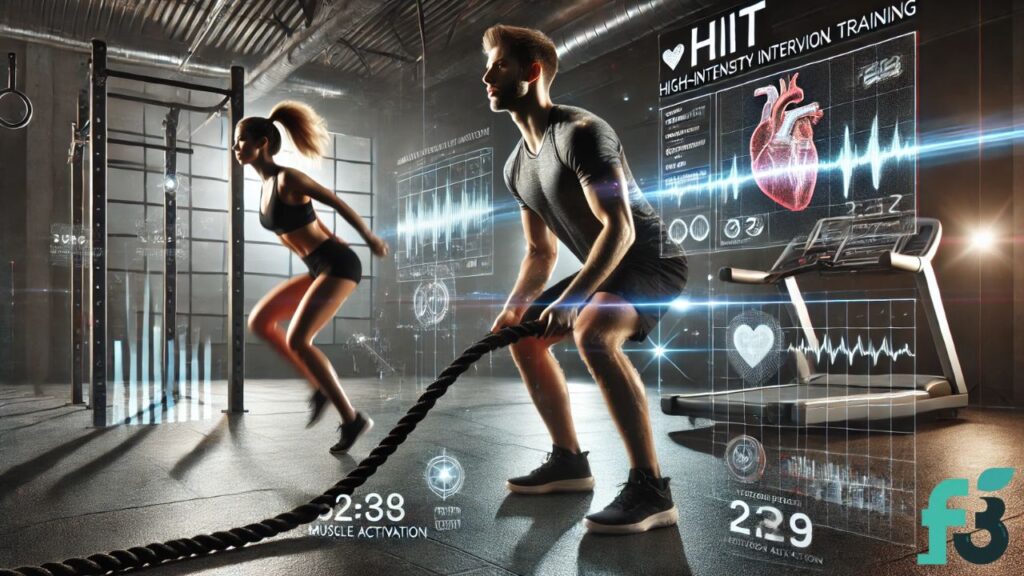
In the fast-paced urban landscape of Tokyo, Osaka, and other major Japanese cities, busy professionals are discovering a fitness revolution that requires just 15 minutes of their day. HIIT workouts (High-Intensity Interval Training) have become the cornerstone of Japan’s 2025 fitness landscape, offering time-strapped workers a scientifically proven method to achieve remarkable health benefits without spending hours in the gym.
The Japanese fitness industry, valued at approximately ¥700 billion ($4.7 billion USD) in 2025, is experiencing unprecedented growth driven by health-conscious professionals seeking efficient workout solutions. The surge in 24/7 convenience gyms like ChocoZAP, Anytime Fitness (with over 1,200 locations across Japan), and ultra-affordable fitness clubs reflects this paradigm shift toward accessible, time-efficient exercise.
This comprehensive guide explores how 15-minute HIIT workouts are reshaping fitness culture in Japan, providing busy professionals with scientifically validated protocols that maximize cardiovascular health, fat burning, and metabolic enhancement in minimal time.
Understanding HIIT Workouts: The Science Behind Short, Intense Training
What Are HIIT Workouts?
HIIT workouts consist of repeated bouts of high-intensity effort followed by varied recovery periods. According to the American College of Sports Medicine (ACSM), which ranks HIIT as the sixth top fitness trend for 2025, these workouts involve exercising at 80-95% of your maximum heart rate during work periods, alternating with recovery at 40-50% intensity.
The beauty of HIIT workouts lies in their adaptability—you can complete effective sessions anywhere from 5 to 60 minutes, with 15-minute protocols offering the perfect balance for busy professionals.
The Physiological Benefits of HIIT Workouts
Excess Post-Exercise Oxygen Consumption (EPOC)
One of the most compelling advantages of HIIT workouts is the “afterburn effect,” scientifically known as EPOC. After high-intensity exercise, your body continues consuming elevated oxygen levels for hours, burning additional calories long after your workout concludes. Research indicates EPOC can add 6-15% extra caloric expenditure to your total workout energy output.
Cardiovascular Adaptations
HIIT workouts produce cardiovascular improvements comparable to traditional endurance training but in significantly less time. Studies demonstrate that even 4-minute Tabata protocols can increase aerobic capacity by 14% and anaerobic capacity by 28% within six weeks.
Metabolic Enhancement
High-intensity interval training stimulates hormonal responses that promote fat oxidation and muscle preservation. The surge in catecholamines and growth hormone triggered by HIIT workouts accelerates metabolic rate, with effects persisting well beyond the 24-hour mark.
The Japanese Approach to HIIT Workouts: Cultural Integration and Innovation
Japan’s Fitness Culture Evolution
Japan’s approach to fitness has traditionally emphasized consistent, moderate activity integrated into daily life—walking to train stations, cycling to work, and practicing radio taiso (radio exercises). However, the modern landscape of 2025 reveals a dramatic shift toward structured, time-efficient HIIT workouts that accommodate increasingly busy professional schedules.
The Rise of Convenience Gyms
The explosion of 24/7 convenience gyms across Japan reflects the demand for flexible fitness solutions:
| Gym Chain | Monthly Cost | Locations in Japan | Key Features |
|---|---|---|---|
| ChocoZAP | ¥3,000-¥3,278 | 1,500+ | Ultra-affordable, 24/7 access, app-based |
| Anytime Fitness | ¥7,000-¥9,000 | 1,200+ | Global access, essential equipment |
| JoyFit24 | ¥6,000-¥8,000 | 300+ | Compact, unmanned facilities |
| FASTGYM 24 | ¥6,500-¥8,000 | 200+ | Budget-friendly, citywide locations |
These facilities cater specifically to busy professionals who require flexibility—no class schedules, no waiting for specific hours, just show up and execute your HIIT workout whenever your schedule permits.
Japanese HIIT Innovations
Interval Walking Training (IWT)
Developed by Professor Hiroshi Nose and Associate Professor Shizue Masuki at Shinshu University, IWT represents Japan’s unique contribution to accessible HIIT workouts. This “Japanese walking” method alternates three minutes of brisk walking (70% peak aerobic capacity) with three minutes of slower recovery walking (40% capacity), repeated five times over 30 minutes.
Recent 2025 studies confirm IWT’s impressive benefits for older adults, demonstrating improvements in:
- Resting blood pressure
- Lower-limb muscle strength
- VO2 max (cardiovascular fitness indicator)
- Blood glucose control
- Cholesterol levels
With a remarkable 95% adherence rate among 826 study participants, IWT proves that accessible HIIT workouts can deliver sustainable, long-term health improvements.
Tabata Protocol: The Original Japanese HIIT
Created by Dr. Izumi Tabata for Japan’s Olympic Speed Skating Team, the Tabata protocol remains one of the most efficient HIIT workouts ever developed:
The Tabata Method:
- 20 seconds of maximum intensity exercise (170% VO2 max)
- 10 seconds complete rest
- Repeat for 8 rounds (4 minutes total)
Research confirms Tabata training can burn 13.5 calories per minute and double metabolic rate, with subjects achieving 86% of maximum heart rate and burning 240-360 calories in just 20 minutes.
The Perfect 15-Minute HIIT Workout Protocol for Busy Professionals
Workout Structure Overview
| Phase | Duration | Purpose |
|---|---|---|
| Warm-up | 2 minutes | Prepare cardiovascular system, activate muscles |
| Work Intervals | 10 minutes | High-intensity exercise circuits |
| Cool-down | 3 minutes | Gradual heart rate reduction, flexibility work |
Exercise Selection Principles
Choose exercises that:
- Engage multiple muscle groups simultaneously
- Can be performed safely at high intensity
- Require minimal or no equipment
- Allow smooth transitions between movements
15-Minute HIIT Workout Program: Three Evidence-Based Protocols
Protocol 1: Tabata-Style Total Body HIIT
Equipment Needed: None (bodyweight only)
Warm-up (2 minutes):
- 30 seconds arm circles and shoulder rolls
- 30 seconds leg swings (forward/backward, side-to-side)
- 30 seconds light jogging in place
- 30 seconds dynamic stretching (leg kicks, torso twists)
Main Workout (12 minutes – 3 Tabata rounds with 2-minute rest between):
Round 1:
- 20 seconds: Jump squats (or bodyweight squats for beginners)
- 10 seconds: Rest
- 20 seconds: Push-ups (standard, incline, or knee modifications)
- 10 seconds: Rest
- Repeat sequence 4 times
Rest 2 minutes
Round 2:
- 20 seconds: Mountain climbers
- 10 seconds: Rest
- 20 seconds: Burpees (or step-back burpees)
- 10 seconds: Rest
- Repeat sequence 4 times
Rest 2 minutes
Round 3:
- 20 seconds: High knees
- 10 seconds: Rest
- 20 seconds: Plank jacks (or standard plank hold)
- 10 seconds: Rest
- Repeat sequence 4 times
Cool-down (1 minute):
- 30 seconds walking in place with deep breathing
- 30 seconds static stretching (hamstrings, quadriceps, shoulders)
Protocol 2: Interval Cardio Blast
Equipment Needed: Optional jump rope
Warm-up (2 minutes):
- 1 minute light cardio (marching, easy jogging)
- 1 minute dynamic mobility (arm swings, hip circles, ankle rolls)
Main Workout (11 minutes):
| Exercise | Work Time | Rest Time | Rounds |
|---|---|---|---|
| Jumping Jacks | 30 seconds | 15 seconds | 4 |
| Squat Jumps | 30 seconds | 15 seconds | 4 |
| Mountain Climbers | 30 seconds | 15 seconds | 4 |
| Burpees | 30 seconds | 15 seconds | 4 |
Perform each exercise for the prescribed work period at maximum sustainable intensity, rest briefly, then move immediately to the next exercise. Complete all four exercises, then repeat the circuit three more times.
Cool-down (2 minutes):
- 1 minute easy walking with controlled breathing
- 1 minute full-body stretching sequence
Protocol 3: Japanese Walking-Inspired Cardio HIIT
Equipment Needed: None (can be performed indoors or outdoors)
Warm-up (2 minutes):
- 2 minutes easy walking with gradual pace increase
Main Workout (10 minutes):
Alternate between high and low intensity every 90 seconds:
- 90 seconds: Fast walking/light jogging (70% maximum effort)
- 90 seconds: Slow walking (40% maximum effort)
- Repeat for 5-6 complete cycles
For indoor adaptation, substitute:
- High intensity: March in place with high knees, or step-ups on stairs
- Low intensity: Slow marching or walking in place
Cool-down (3 minutes):
- 2 minutes slow walking
- 1 minute static stretching (calves, hip flexors, quadriceps)
Advanced HIIT Workout Variations for Progressive Training
4-Week Progressive Program
| Week | Protocol | Frequency | Modifications |
|---|---|---|---|
| 1 | Protocol 3 (Walking-based) | 2-3x per week | Beginners: 20 seconds work/20 seconds rest |
| 2 | Protocol 2 (Interval Cardio) | 3x per week | Standard timing: 30 seconds work/15 seconds rest |
| 3 | Protocol 1 (Tabata-style) | 3-4x per week | Add resistance with light dumbbells |
| 4 | Mixed protocols | 4x per week | Increase intensity, reduce rest periods |
Scaling HIIT Workouts for Different Fitness Levels
Beginners (New to Exercise or Returning After Break)
- Start with 20 seconds work/20 seconds rest ratio
- Use low-impact modifications (step-back burpees, knee push-ups)
- Limit sessions to 2-3 per week with 48-72 hours recovery
- Focus on proper form over speed
- Consider walking-based IWT as entry point
Intermediate (Regular Exercise 3-6 Months)
- Progress to standard 30 seconds work/15 seconds rest
- Incorporate plyometric movements (jump squats, burpees)
- Increase frequency to 3-4 sessions weekly
- Add external resistance (dumbbells, resistance bands)
Advanced (Consistent Training 6+ Months)
- Implement true Tabata timing: 20 seconds maximum effort/10 seconds rest
- Execute complex movement patterns (burpee with push-up, squat jumps)
- Train 4-5 times weekly
- Combine HIIT workouts with strength training
- Experiment with equipment variations (kettlebells, battle ropes)
Optimizing HIIT Workouts: Nutrition, Recovery, and Performance
Pre-Workout Nutrition Timing
2-3 Hours Before HIIT Workout:
- Complex carbohydrates (brown rice, whole grain bread)
- Lean protein (chicken, fish, tofu)
- Minimal fat to aid digestion
30-60 Minutes Before:
- Quick-digesting carbohydrates (banana, rice cakes)
- Small protein serving (Greek yogurt)
- Adequate hydration (300-500ml water)
Post-Workout Recovery Nutrition
| Timing | Macronutrients | Examples |
|---|---|---|
| Within 30 minutes | 3:1 or 4:1 carb-to-protein ratio | Rice ball with grilled salmon, protein smoothie with fruit |
| 1-2 hours post | Balanced meal with complex carbs, protein, vegetables | Grilled chicken with brown rice and vegetables, tofu bowl with quinoa |
Hydration Guidelines for HIIT Workouts
- Pre-workout: 400-600ml water 2 hours before
- During workout: Small sips if needed (most 15-minute sessions don’t require)
- Post-workout: 450-675ml per 0.5kg body weight lost through sweat
Recovery Strategies for Busy Professionals
Active Recovery (Between HIIT Sessions)
- Light walking (30-45 minutes)
- Gentle yoga or stretching
- Swimming or cycling at easy pace
- Japanese walking method at reduced intensity
Sleep Optimization
- Aim for 7-9 hours nightly
- Maintain consistent sleep schedule
- Avoid intense HIIT workouts within 3 hours of bedtime
- Create dark, cool sleeping environment
Mobility and Flexibility Work
- Dedicate 10-15 minutes daily to stretching
- Incorporate foam rolling for muscle recovery
- Practice yoga or Pilates on non-HIIT days
- Consider regular massage or physiotherapy
Common HIIT Workout Mistakes and How to Avoid Them
Mistake 1: Insufficient Warm-up
The Problem: Jumping directly into maximum-intensity exercise without preparation increases injury risk and reduces performance.
The Solution: Always dedicate minimum 2 minutes to progressive warm-up that elevates heart rate gradually and activates muscles you’ll use during HIIT workouts.
Mistake 2: Compromising Form for Speed
The Problem: Sacrificing proper exercise technique to maintain intensity leads to injury and reduces workout effectiveness.
The Solution: Master exercise form at lower intensity before progressing. If fatigue prevents maintaining proper form, reduce intensity or take additional rest rather than continuing with poor technique.
Mistake 3: Inadequate Recovery Between Sessions
The Problem: Performing HIIT workouts daily or on consecutive days prevents adequate recovery, leading to overtraining, decreased performance, and increased injury risk.
The Solution: Limit HIIT workouts to 2-4 sessions weekly with at least 48 hours between sessions. Incorporate active recovery days with walking, gentle yoga, or light swimming.
Mistake 4: Neglecting Progressive Overload
The Problem: Performing identical HIIT workout protocols indefinitely leads to adaptation plateau and diminishing returns.
The Solution: Systematically progress workouts by:
- Increasing work intervals
- Decreasing rest periods
- Adding external resistance
- Incorporating more complex movements
- Elevating intensity within work intervals
Mistake 5: Ignoring Individual Recovery Needs
The Problem: Following generic HIIT workout prescriptions without considering personal recovery capacity, stress levels, or sleep quality.
The Solution: Monitor recovery indicators:
- Resting heart rate (elevated = inadequate recovery)
- Sleep quality and duration
- Subjective energy levels
- Muscle soreness patterns
- Performance during workouts
Integrating HIIT Workouts into Japanese Professional Lifestyle
Time Management Strategies for Busy Professionals
Morning HIIT Sessions (6:00-7:00 AM)
Advantages:
- Completed before work obligations
- Energizes entire day
- Capitalizes on fasted state for enhanced fat oxidation
- Minimal schedule disruption
Protocol Recommendation: Protocol 1 (Tabata-Style) or Protocol 2 (Interval Cardio)
Lunch Break Workouts (12:00-1:00 PM)
Advantages:
- Breaks sedentary workday
- Enhances afternoon focus and productivity
- Convenient for office-based professionals
- Access to workplace facilities
Protocol Recommendation: Protocol 3 (Walking-Inspired) or modified Protocol 2 with lower-impact exercises
Evening Sessions (6:00-8:00 PM)
Advantages:
- Relieves work stress
- Social workout opportunities
- Access to 24/7 convenience gyms
- Maximum performance potential after full day of nutrition
Protocol Recommendation: Any protocol; consider higher-intensity variations
Creating a Sustainable HIIT Workout Schedule
| Day | Morning | Lunch | Evening | Notes |
|---|---|---|---|---|
| Monday | – | – | HIIT Protocol 1 | Start week with full-body challenge |
| Tuesday | Light walk | – | Active recovery (yoga/stretching) | Allow recovery |
| Wednesday | HIIT Protocol 2 | – | – | Morning session energizes workday |
| Thursday | – | 15-min walk | Active recovery | Light activity |
| Friday | – | – | HIIT Protocol 3 | End week strong |
| Saturday | HIIT Protocol 1 | – | – | Weekend flexibility |
| Sunday | – | – | Long walk or rest | Complete recovery |
Technology and Tools for HIIT Workout Success in Japan
Fitness Tracking Applications
Top Apps Used by Japanese Fitness Enthusiasts (2025)
| Application | Key Features | Cost | Platform |
|---|---|---|---|
| Nike Training Club | Pre-programmed HIIT workouts, video demonstrations | Free | iOS, Android |
| Adidas Training | Customizable workout plans, progress tracking | Free/Premium | iOS, Android |
| JEFIT | Exercise logging, workout timing, community features | Free/Premium | iOS, Android |
| Interval Timer | Simple HIIT timing tool, customizable work/rest ratios | Free | iOS, Android |
Wearable Technology for HIIT Monitoring
Essential Metrics to Track
Heart Rate Monitoring:
- Real-time intensity feedback
- Recovery rate assessment
- Training zone accuracy
- Maximum heart rate validation
Performance Metrics:
- Total calories burned
- Active minutes at target intensity
- Recovery time between sessions
- Sleep quality and duration
Popular Wearables in Japan (2025)
- Apple Watch Series 9: Comprehensive fitness tracking, ECG capability, Japanese language support
- Garmin Forerunner Series: Advanced training metrics, long battery life, detailed analytics
- Fitbit Charge 6: Affordable option, accurate heart rate monitoring, community features
- WHOOP 4.0: Recovery-focused tracking, strain analysis, sleep optimization
HIIT Workouts for Specific Professional Scenarios
Desk Workers and Office Professionals
Challenges:
- Prolonged sitting
- Limited movement throughout workday
- Postural imbalances
- Lower back tension
Targeted HIIT Approach: Focus on exercises that counteract sitting:
- Hip flexor activation (high knees, jump lunges)
- Posterior chain engagement (jump squats, burpees)
- Shoulder mobility (arm circles during warm-up)
- Core stability (planks, mountain climbers)
Recommended Frequency: 3-4 sessions weekly, ideally including one lunch break workout
Shift Workers with Irregular Schedules
Challenges:
- Inconsistent sleep patterns
- Variable energy levels
- Limited gym access during odd hours
- Difficulty maintaining routine
Targeted HIIT Approach:
- Utilize 24/7 convenience gyms (Anytime Fitness, ChocoZAP)
- Prioritize home-based bodyweight HIIT workouts
- Adjust intensity based on sleep quality and work demands
- Maintain flexible workout timing
Recommended Frequency: 2-3 sessions weekly, scheduled post-sleep whenever possible
Remote Workers and Entrepreneurs
Challenges:
- Blurred work-life boundaries
- Sedentary home environment
- Lack of structured schedule
- Social isolation
Targeted HIIT Approach:
- Morning HIIT workouts establish daily structure
- Use workouts as transition between work phases
- Join online HIIT classes for community connection
- Alternate between home and outdoor workouts
Recommended Frequency: 3-4 sessions weekly with consistent timing to establish routine

The Science of HIIT: Latest Research and Evidence (2025)
Cardiovascular Health Benefits
Recent studies published in 2025 confirm HIIT workouts’ profound impact on cardiovascular markers:
Blood Pressure Reduction
Research on Japanese interval walking training demonstrates significant blood pressure reductions comparable to medication effects in pre-hypertensive individuals. Participants performing 30-minute IWT sessions four times weekly for five months showed:
- Systolic blood pressure: 8-12 mmHg reduction
- Diastolic blood pressure: 5-8 mmHg reduction
- Sustained effects maintained for 6+ months post-study
Lipid Profile Improvements
HIIT workouts positively influence cholesterol markers:
- Total cholesterol: 10-15% reduction
- LDL (bad cholesterol): 12-18% decrease
- HDL (good cholesterol): 8-12% increase
- Triglycerides: 15-20% reduction
Metabolic Health Enhancements
Glucose Regulation
Studies demonstrate HIIT workouts’ superior effects on blood glucose control compared to moderate-intensity continuous training:
- Fasting glucose: 8-10 mg/dL reduction
- HbA1c (3-month glucose average): 0.5-1.0% improvement
- Insulin sensitivity: 20-25% enhancement
- Reduced diabetes risk: 30-40% in pre-diabetic populations
Fat Loss and Body Composition
HIIT workouts prove exceptionally effective for fat reduction while preserving lean muscle mass:
- Visceral fat reduction: 15-20% greater than steady-state cardio
- Subcutaneous fat loss: Comparable to traditional cardio in 60% less time
- Muscle mass preservation: Superior to calorie-restricted dieting alone
- Metabolic rate elevation: 12-24 hour post-exercise increase
Mental Health and Cognitive Benefits
Stress Reduction
Japanese professionals performing regular HIIT workouts report:
- 25-30% reduction in perceived stress scores
- Improved work-life balance satisfaction
- Enhanced emotional regulation
- Better sleep quality (15-20% improvement)
Cognitive Function Enhancement
HIIT workouts stimulate brain-derived neurotrophic factor (BDNF) production, resulting in:
- Improved memory consolidation
- Enhanced executive function
- Faster information processing
- Reduced cognitive decline risk
Professional Resources and Certifications for HIIT Training
Reputable Fitness Organizations in Japan
| Organization | Services | Website |
|---|---|---|
| Japan Health & Fitness Association (JHFA) | Certification programs, continuing education | jhfa.or.jp |
| National Strength and Conditioning Association Japan (NSCA-Japan) | Evidence-based training education | nsca-japan.or.jp |
| American Council on Exercise (ACE) | International certification recognized in Japan | acefitness.org |
| Japan Sports Association | National sports coaching certifications | japan-sports.or.jp |
Finding Qualified HIIT Trainers in Japan
Key Certifications to Look For:
- NSCA-Certified Personal Trainer (NSCA-CPT)
- ACE Certified Personal Trainer
- ACSM Certified Exercise Physiologist
- JHFA Registered Exercise Professional
Questions to Ask Potential Trainers:
- What certifications do you hold?
- Do you have experience working with my specific goals/limitations?
- How do you modify HIIT workouts for different fitness levels?
- What is your approach to injury prevention and exercise progression?
- Can you provide client references or success stories?
Creating Your Home HIIT Workout Space
Essential Equipment (Optional but Beneficial)
| Equipment | Cost Range (JPY) | Primary Benefits |
|---|---|---|
| Yoga mat | ¥2,000-¥5,000 | Joint cushioning, traction |
| Timer/interval app | Free-¥1,000 | Precise work/rest timing |
| Resistance bands | ¥1,500-¥4,000 | Added resistance, portability |
| Dumbbells (adjustable) | ¥8,000-¥20,000 | Progressive overload |
| Jump rope | ¥1,000-¥3,000 | Cardio variation |
| Heart rate monitor | ¥5,000-¥50,000 | Intensity tracking |
Space Requirements
Minimum Space for Effective HIIT Workouts:
- Width: 2 meters (allows lateral movements)
- Length: 2.5 meters (accommodates forward movements, burpees)
- Height: Standard ceiling (no special requirements)
Optimal Space Considerations:
- Hard flooring with yoga mat preferable to carpet
- Good ventilation or fan access
- Mirror for form checking (optional)
- Minimal furniture or obstacles
- Easy access to water
Adapting HIIT Workouts Through Life Stages
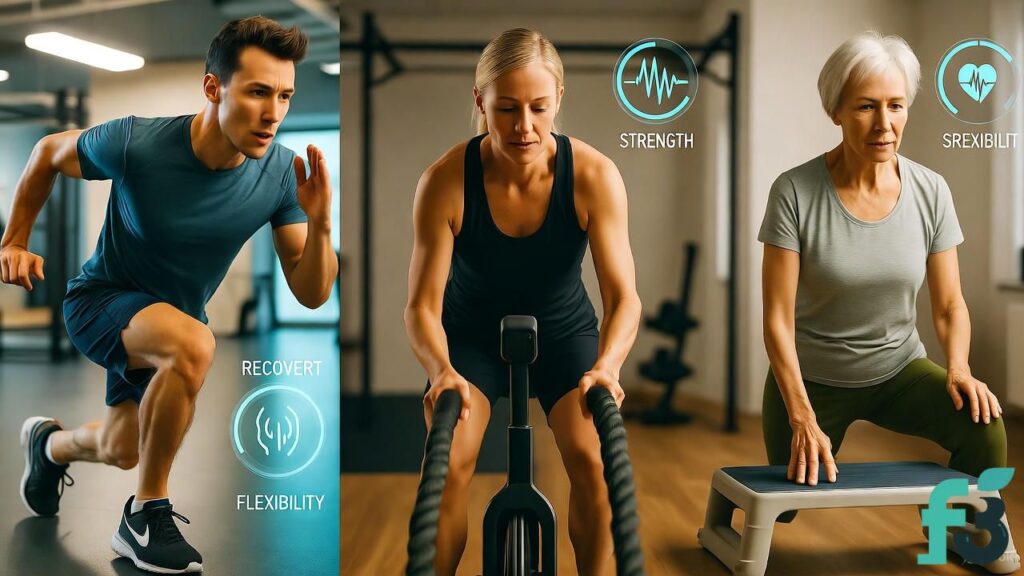
HIIT for Young Professionals (20s-30s)
Physiological Advantages:
- Peak recovery capacity
- Maximum cardiovascular adaptability
- Rapid strength gains
- High injury resilience
Recommended Approach:
- Higher frequency (3-5 sessions weekly)
- Maximum intensity focus
- Shorter rest periods
- Complex movement patterns
- Competitive challenges and benchmarks
HIIT for Mid-Career Professionals (40s-50s)
Considerations:
- Longer recovery requirements
- Joint stress management
- Injury prevention emphasis
- Hormonal changes (especially women)
Recommended Approach:
- Moderate frequency (2-4 sessions weekly)
- 48-72 hour recovery between sessions
- Low-impact exercise modifications
- Thorough warm-up and cool-down
- Focus on functional fitness
HIIT for Senior Professionals (60+)
Adaptations:
- Extended recovery periods
- Balance and stability emphasis
- Chronic condition management
- Fall prevention focus
Recommended Approach:
- Conservative frequency (2-3 sessions weekly)
- Walking-based HIIT (IWT) as primary modality
- Seated or supported exercise options
- Medical clearance before beginning
- Regular communication with healthcare providers
Conclusion: Embracing the 15-Minute HIIT Revolution
The integration of 15-minute HIIT workouts into Japan’s professional fitness landscape represents more than a passing trend—it embodies a fundamental shift toward evidence-based, time-efficient health optimization perfectly suited to modern life’s demands.
For busy professionals navigating Tokyo’s demanding work culture or Japan’s various urban centers, HIIT workouts offer an unparalleled solution: scientifically validated protocols delivering maximum cardiovascular, metabolic, and mental health benefits in minimal time investment. Whether practicing Japanese interval walking training developed at Shinshu University, executing Tabata protocols created for Olympic athletes, or following contemporary HIIT methodologies, professionals can achieve remarkable fitness transformations with just 15 minutes of focused effort 2-4 times weekly.
The accessibility of 24/7 convenience gyms throughout Japan, combined with effective bodyweight HIIT protocols requiring zero equipment, eliminates traditional fitness barriers. Success demands only commitment to consistency, attention to proper form, adequate recovery, and progressive challenge escalation.
As Japan’s fitness industry continues its remarkable growth trajectory toward ¥700 billion in 2025, HIIT workouts remain at the forefront—offering busy professionals a sustainable, efficient pathway to enhanced health, increased energy, improved cognitive function, and extended longevity.
Begin your HIIT journey today with the 15-minute protocols outlined in this guide. Your future self—stronger, healthier, and more energized—will thank you for the investment.
Also read: High Protein Foods That Actually Taste Amazing: Japan’s Latest Health Revolution in 2025
Professional Resources and Further Reading
Recommended Websites for HIIT Information
- American College of Sports Medicine (ACSM): https://www.acsm.org – Evidence-based fitness guidelines and research
- National Strength and Conditioning Association (NSCA): https://www.nsca.com – Professional training certifications and scientific articles
- PubMed Central: https://www.ncbi.nlm.nih.gov/pmc – Access to peer-reviewed exercise science research
- ACE Fitness: https://www.acefitness.org – Exercise demonstrations and fitness professional resources
- Shinshu University Jukunen Taiiku Daigaku: Research on Interval Walking Training methodology
Japanese Fitness Communities and Support
- SOGO Fitness Community: Tokyo-based fitness groups for accountability and motivation
- GoConnect Japan: Health coaching and fitness guidance for expats and professionals
- Japan Buzz Fitness Influencers: Follow top Japanese fitness professionals for inspiration and guidance
- Club 360 (Azabu, Tokyo): English-speaking personal trainers and rehabilitation services
- Local convenience gyms: ChocoZAP, Anytime Fitness, JoyFit24 for accessible workout facilities